Showing posts with label palm oil. Show all posts
Showing posts with label palm oil. Show all posts
Wednesday, 27 February 2008
Penusah Tana, The Forgotten Struggle, a film by Hilary Chiew and Chi Too
a film Hilary Chiew and Chi Too
Penusah Tana - the forgotten struggle
For over 20 years, Ajang Kiew, a Penan Leader, has been setting up blockades to protect his Native Customary Rights land from the intrusion of logging companies. To his dismay, his cries and efforts have fallen on deaf ears. Now, he sets up one final struggle before oil palm and tree plantations take over for good.

Tuesday, 22 January 2008
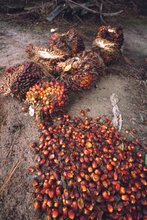
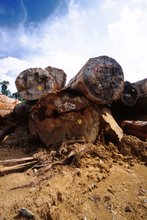
Photos from the Palm Oil Story
Navigate between images using the numbers and arrows. Photos taken between 2005 and 2007 in Kalimantan and Sumatra
Tuesday, 22 May 2007
WHY IS UNSUSTAINABLE PALM OIL EXPANSION A MAJOR ENVIRONMENTAL PROBLEM?
Vast swathes of tropical rainforest are being cleared to grow palm oil, especially in Kalimantan, where it is estimated that an area the size of three football pitches is cleared every minute. This deforestation is avoidable – millions of hectares of degraded land stand empty or unused in |ndonesia – but the potential profits from selling the timber reduces the costs of setting up a plantation by around 40%. Often, unscrupulous companies acquire land for the sole purpose of selling the valuable timber harvested from the hardwood forests – in many places the cleared land is not then developed for palm oil, with companies declaring bankruptcy in order to fulfil their contractual obligations. Even companies that do establish palm oil plantations sometimes choose to convert forested land because of the profit from the timber – this provides an immediate cash injection into the company when they must wait 3 to 4 years to harvest a profitable crop from young oil palms.
World-leading orangutan experts have now identified the clearance of rainforest for palm oil expansion as the single greatest threat to the survival of the orangutan in the wild. Current estimates are that each year 5,000 orangutans are dying in Borneo, and 1,000 a year in Sumatra – that means 15 orangutans are dying every single day. This is catatrophic for the orangutan, but also reflects the loss of a wider rich and unique biodiversity within the Indonesian rainforest. For example, Sumatran lowland forest is 2.5 times richer in terms of biodiversity of species than the very best Amazonian rainforest, and 1.8 times richer than the best Central African rainforest. This means that unsustainable palm oil production is destroying the most species-rich rainforests in the world. Orangutans, Asian elephants, sun bears, clouded leopards, Sumatran tigers, hornbills – these are just some of the better-known species losing their habitat and their lives due to unsustainable palm oil expansion.
Forest conversion for palm oil almost always impacts negatively on local people who are often reliant on natural forest for their livelihood. Whilst an estimated 2% of the Indonesian population make their living from the palm oil industry, almost 44% are reliant on natural forest resources. In Kalimantan, jobs on the plantations often go to migrant labourers from elsewhere in Indonesia, leaving a disenfranchised and dispossessed local population. On occasions when local people were employed by the plantation we discovered the household income for the family was still often reduced by up to 50%. In Indonesia, pollution from chemical spraying at plantations, and unprocessed effluent from mills from less scrupulous companies is getting into local water supplies – causing illness, particularly in children, and killing off fish stock, that in some areas was the focus of the local economy.
On a global scale, Indonesian deforestation for palm oil is also inextricable from climate change. There are widespread environmental and economical threats, not to mention human health risks, posed by the ever-growing problem of smog and smoke stretching as far as Kuala Lumpur caused by huge forest fires during the dry season each year. Furthermore, the topside clearance of peat-swamp forests is one of the most worrying environmental threats of our time. The subsequent release of CO2 and methane from peat reserves in Kalimantan and Sumatra (which in some places reach 60 metres in depth) is already impacting upon greenhouse gas levels and global climate change.
The devastating forest fires of 1997 made up 30% of global CO2 emissions that year. This was the greatest single anthropogenic release of greenhouse gases on record. The palm oil crisis is evidently a matter of critical importance, not only for Asian conservation, but globally. Perversely, the proposed development of palm oil for biofuel – initially provoked by the desire for a sustainable alternative to fossil fuels – will amplify the current problem unimaginably.
Sunday, 11 February 2007
WHAT IS PALM OIL?
By buying products containing unsustainable palm oil, shoppers are unwittingly helping to finance an environmental disaster which is not only accelerating global climate change, but also causing the decimation of one of our closest cousins. They are also contributing to widespread human rights abuses.
During the last 15 years, annual global production of palm oil has trebled. By 2004, Europe was the world’s largest importer of palm oil, making up 17% of the market. In the UK, palm oil is present in 1 in 10 supermarket products – from lipstick to margarine, cereals to soap. It is almost always labelled generically as a “vegetable oil”.
Oil palms produce a greater yield per hectare than any other edible oil (up to ten times that of soya) and palm oil is valued by producers because it is solid at room temperature. Although the plant itself originates from West Africa, the vast majority of palm oil comes from Malaysia and Indonesia, where monoculture plantations are rapidly replacing some of the most bio-diverse areas of rainforest on Earth. After planting, it takes 3-4 years for the palms to become productive, and they have a life expectancy of around 25 years.
Palm oil production is predicted to increase by another 30% by 2010. Demand is increasing from the growing economies of China and India, and the development of palm oil for biofuel could see the crisis skyrocket.
PALM OIL: DEVELOPING A CONSTRUCTIVE SOLUTION...
The palm oil industry poses a dilemma. Whilst is undeniably provides the people and governments with an invaluable source of revenue for development, the substantial environmental and social costs cannot be ignored. A boycott of palm oil products in Europe and elsewhere would not only be unjust but also unproductive, no doubt increasing pressure on natural resources including timber to replace lost income. (Furthermore, in the UK it is often impossible to identify which products contain palm oil, so if it is named as a product this company is probably investing more effort in securing a responsible source for good, sustainable palm oil.) In Indonesia there are millions of hectares of degraded land standing empty and unused – the only solution is to provide palm oil suppliers with an incentive to establish plantations on these areas of already un-forested land rather than seeking out forested areas in order to cut costs by selling the timber.
The Roundtable on Sustainable Palm Oil (RSPO) is an alliance of palm oil producers, processors, traders, consumer goods manufacturers, retailers and non-governmental organisations (NGOs) established in order to develop the principles and criteria of sustainable palm oil, and facilitate the development of sustainable palm oil production. The Orangutan Film Protection Project is part of the broader Ape Alliance Palm Oil Working Group (ApAl POWG) which has worked to push for responsibility from the UK retail sector and to support the goals and objectives of the RSPO. As a result of our work and the work of the ApAl POWG partners we have seen a huge shift in the UK retail sector with all major supermarkets now belonging to the RSPO. This is a great step forward, and is illustrative of the positive benefits of the collaborative approach of the RSPO, where industry representatives and environmental and social NGOs all get a voice.
We need your help to continue to make a difference: see Current Campaigns
Products Containing Palm Oil
‘Ready meals’, bread, cakes, ice creams, cereal, biscuits, chips, crisps, margarine, chocolate, paints, soaps, make-up, shampoo, shower gels, washing powders, fabric softeners and more...
Often ‘vegetable oil’ is written on a product’s ingredient list, the consumer then does not know if they are eating sunflower seed oil, rape oil or palm oil – as such, palm oil it is often a hidden ingredient.
1 in 10 UK supermarket products contain palm oil
Often ‘vegetable oil’ is written on a product’s ingredient list, the consumer then does not know if they are eating sunflower seed oil, rape oil or palm oil – as such, palm oil it is often a hidden ingredient.
1 in 10 UK supermarket products contain palm oil
Resources and Publications
There are two publications which are invaluable for getting a fuller perspective on the environmental issues surrounding palm oil (click images to download):
"The Last Stand of the Orangutan" - UNEP/UNESCO

"The Oil for Ape Scandal" - The Ape Alliance & Friends of the Earth

"The Last Stand of the Orangutan" - UNEP/UNESCO
"The Oil for Ape Scandal" - The Ape Alliance & Friends of the Earth
Friday, 22 September 2006
Orangutans and Palm Oil - SKY World News Tonight
SKY World News Tonight explore the impact of unsustainable palm oil on the remaining orangutan populations in Borneo and Sumatra. James Rubin presents with Lisa Holland.
Subscribe to:
Posts (Atom)